Warning vs Watch in the UK: What’s the Difference?
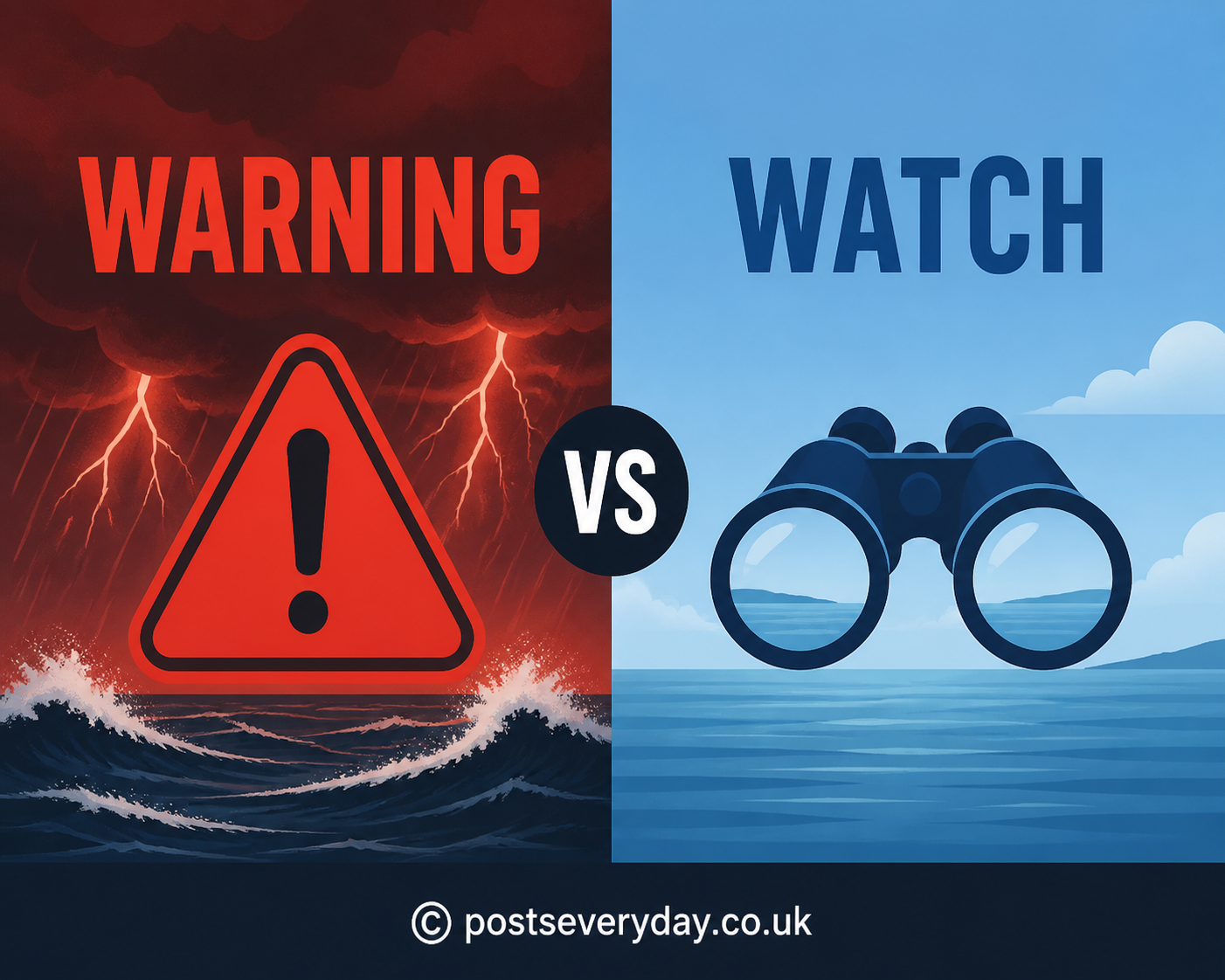
Warning vs Watch in the UK: What’s the Difference?
If you are comparing warning vs watch for UK weather, the key point is that they are not usually two levels in the Met Office’s main severe-weather system. The Met Office uses yellow, amber and red weather warnings; the word “watch” may be used in other, specific alert systems or in general conversation.
Warning vs watch: the simple difference
In everyday English, a watch suggests that you should keep an eye on a possible or developing risk. A warning tells you that a hazard may affect you and that you should read the advice and consider what action to take.
Those everyday meanings can be helpful, but they are not a reliable guide to every country’s official alert system. In particular, do not assume that a UK “watch” always means the same thing as a US weather watch.
How UK severe-weather warnings work
The Met Office issues UK severe-weather warnings for hazards such as rain, wind, snow, ice, fog, thunderstorms and extreme heat. Warnings are coloured yellow, amber or red. The colour reflects both the potential impact and the likelihood of that impact, so it is important to read the details rather than judging a warning by its colour alone.
Yellow warning
A yellow warning covers a range of possible impacts. It might mean limited disruption for some people, or the chance of more serious effects where confidence is lower. Check whether your area and plans could be affected.
Amber warning
An amber warning means severe weather is more likely to cause impacts that could disrupt plans. The Met Office advises people to consider changing plans and taking steps to protect themselves and their property.
Red warning
A red warning means dangerous weather is expected. Take action to protect yourself and others, avoid travel where possible, and follow advice from emergency services and local authorities.
These colours are not a simple one-to-one replacement for a “watch” and “warning” pair. For example, a yellow warning is still an official warning, but its likely impact can vary. Read the warning’s area, timing, expected effects and safety advice.
What about flood alerts and warnings?
Flood messages use their own terms, and the system can differ by UK nation. In England, the Environment Agency uses three levels: a flood alert means flooding is possible, a flood warning means flooding is expected, and a severe flood warning means flooding could endanger life and cause major disruption.
So a flood alert may sound a little like what some people mean by a weather “watch”, but it is an official flood message with its own meaning. Follow the instructions for the area and hazard in the message, and check the relevant local authority or flood service for your nation.
What should you do when an alert or warning appears?
- Check the source. Look for an official Met Office weather warning or the relevant flood-warning service.
- Check the place and time. Make sure the warning covers your location and the period when you will be there.
- Read the expected impacts. Look for advice about travel, flooding, power cuts or risks to health and safety.
- Act on the advice. Change plans or prepare when the official guidance says to do so.
- Keep checking for updates. Forecasts and warnings can change as the situation develops.
Examples
- Heavy rain: A Met Office yellow warning is not merely a “watch”. Read the warning to see where rain may cause disruption and what precautions are advised.
- Possible flooding in England: A flood alert means flooding is possible, so get ready and monitor updates. A flood warning means flooding is expected, so act on the official safety advice.
- Dangerous severe weather: A red warning means dangerous weather is expected; take action to keep yourself and others safe.
Frequently asked questions
Does the UK use weather watches?
The Met Office’s main National Severe Weather Warning Service uses yellow, amber and red warnings rather than a standard watch-and-warning pair. The word “watch” does appear in some specific services, so check what the issuing organisation means.
Is a UK watch less serious than a warning?
There is no single UK-wide rule that makes every watch less serious than every warning. The meaning depends on the hazard and the agency that issued the message. Read the official wording and advice.
Is a yellow warning the same as a watch?
No. Yellow is one of the Met Office’s warning colours. It can cover different combinations of likely impacts and confidence, so check the details for your area.
What is the difference between a flood alert and a flood warning?
In England, a flood alert means flooding is possible; a flood warning means flooding is expected and you should act. A severe flood warning indicates potential danger to life and significant disruption.
Where should I check what an alert means?
Use the Met Office for severe-weather warnings and the official flood-warning service for your area. Follow the advice in the message and any instructions from emergency services or local authorities.
Sources used for fact-checking
- Met Office, “Weather warnings guide”
- Met Office, “Met Office weather warnings”
- GOV.UK, Environment Agency, “Flood alerts and warnings: what they are and what to do”
- Met Office, “Space weather warnings explained”
In short: UK weather alerts do not always follow a simple watch-versus-warning scale. Check the hazard, issuing service and practical advice whenever you see warning vs watch.




Post Comment