A Practical Guide to Indoor turf Artificial Grass in the UK
A Practical Guide to Indoor Artificial Grass in the UK
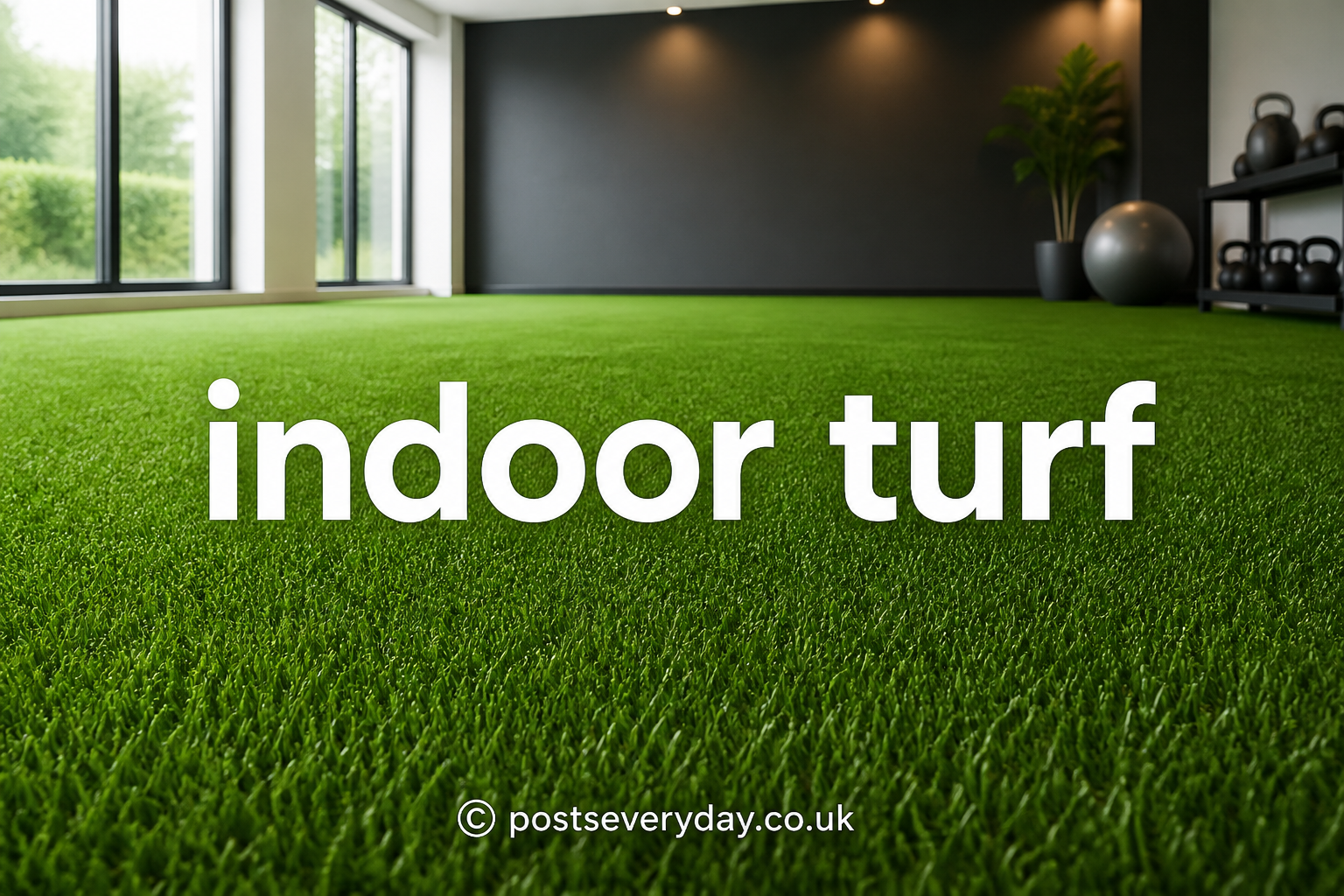
indoor turf is synthetic grass designed for use inside homes, gyms, sports centres and play areas. The right choice depends on what you will use it for: a surface for football drills may not be suitable for a children’s playroom or a decorative display.
What is indoor turf?
Indoor turf is a carpet-like surface made with synthetic grass fibres. Some products have a short, firm pile for exercise or sports practice, while others are softer or more decorative. The backing, pile height and any cushioning can vary by product.
It is different from a full-size artificial grass pitch. A sports pitch is designed for a particular sport and can include several layers beneath the playing surface. Sport England notes that surface types are not interchangeable for every sport, so check the requirements for your activity before choosing a product.
Common uses
- Home gyms: A defined area for stretching, bodyweight exercises or equipment.
- Sports practice: A short training lane for activities such as ball control or fitness drills, if the product is made for that use.
- Play areas: A grass-like finish for an indoor play space. Check the product’s intended age range and safety information.
- Events and displays: A temporary or decorative surface for exhibitions, shop displays or themed rooms.
These are different jobs. For example, a decorative grass mat may look suitable for a home training area but may not have the grip, stability or wear performance you need for repeated exercise.
Potential benefits and limitations
Potential benefits
- It provides a green-looking surface in places where natural grass cannot grow.
- It can help mark out a dedicated play, practice or exercise zone.
- Some products can be cut to fit a room or a small area, subject to the maker’s fitting instructions.
Things to consider
- It is not one surface for every activity. A surface suitable for a display may not suit running, ball work or children’s play.
- It still needs care. Dust, hair and dirt can collect in the fibres. Cleaning needs depend on the product and how the space is used.
- It can affect the floor beneath it. Moisture, an uneven base or unsuitable adhesive may cause problems. Check the subfloor and fitting instructions first.
- It is a synthetic material. Consider what will happen to the product at the end of its useful life and ask the supplier about reuse or disposal options.
- It is not a replacement for a certified sports floor. For organised sport, consult the relevant governing body or a qualified sports-floor specialist.
How to choose indoor turf
- Start with the activity. Write down who will use the area and what they will do on it. Ask the supplier to confirm that the product is intended for that activity.
- Check the surface details. Compare pile height, backing, cushioning and any stated performance information. Do not assume that a thicker or softer surface is automatically safer or better.
- Measure the room. Include edges, doorways and fixed equipment. Ask how seams and edges should be finished so they do not create trip points.
- Inspect the floor below. It should be clean, dry and suitable for the chosen installation method. Follow the product instructions, especially if adhesive or underlay is required.
- Ask about cleaning and upkeep. Request written instructions for routine cleaning, spills and any brushing or vacuuming the product needs.
- Check fire and building requirements. For commercial, public or shared premises, ask the building manager, supplier or relevant building-control professional what documentation is needed for that specific site and use.
- Get a sample. Look at it in the room and test it in a safe way that matches your intended use before ordering a large quantity.
Installation and care
Preparation matters. Remove loose dirt, check that the base is level and dry, and use only a fitting method approved for the product and floor. For a large area, a sports facility or a public venue, consider a qualified installer.
For routine care, follow the manufacturer’s instructions. Remove loose debris and deal with spills using the cleaning method they recommend. Check edges, seams and heavily used spots from time to time; stop using the area and arrange a repair if the surface becomes loose or damaged.
Indoor turf compared with other surfaces
| Surface | May suit | Check before choosing |
|---|---|---|
| Decorative artificial grass | Displays and low-use decorative areas | Whether it is suitable for walking or exercise |
| Sports or gym turf | Specific training activities, when designed for them | Grip, stability, care needs and compatibility with equipment |
| Indoor sports flooring | Sports halls and multi-sport spaces | Sport-specific surface requirements and facility guidance |
| Natural grass | Outdoor gardens and lawns | It is generally not a practical indoor floor covering |
Sport England’s guidance on indoor sports floors describes a range of floor types and explains that selection should reflect the sports and activities planned for the facility. If you are fitting out a sports hall, seek advice for the intended sports rather than relying on a general-purpose grass product.
Frequently asked questions
Can I use indoor turf in a home gym?
Possibly, if the product is made for your intended exercises and is compatible with the floor and equipment. Check the supplier’s guidance on movement, cleaning and installation before buying.
Is indoor turf suitable for every sport?
No. Sports have different surface needs. Ask the sport’s governing body or a qualified facility specialist what surface is appropriate for your sport and level of use.
Can I install it over carpet?
Do not assume that you can. A soft or uneven base can affect how the surface sits and behaves. Check the manufacturer’s fitting instructions and seek professional advice if you are unsure.
How do I clean indoor turf?
Follow the product’s care instructions. Cleaning methods can differ, so ask the supplier before using a cleaning chemical or machine.
Is artificial grass environmentally friendly?
It is a synthetic product, so it does not provide the same living habitat as natural grass. For indoor use, consider how long the product is expected to last and whether the supplier offers reuse or recycling options. Sport England also provides guidance on artificial sports surfaces and end-of-life considerations.
Do I need a professional installer?
Small mats may be straightforward to place, but larger areas, sports facilities and public spaces can need careful floor preparation and secure finishing. Follow the product instructions and consult a qualified installer where the project or site requirements call for it.
Sources used for fact-checking
- Sport England, “Sports halls” and its guidance on floors for indoor sports.
- Sport England, guidance on outdoor artificial sports surfaces and surface selection.
- Health and Safety Executive, “Running a safe amateur sports club.”
- Sports and Play Construction Association, technical guidance for sports surfaces.
Conclusion
Choose a surface for the activity, room and users—not just its appearance. Check the product’s intended use, fitting and cleaning instructions, and get specialist advice for sports facilities or shared premises. With those checks in place, you can decide whether indoor turf is the right fit for your space.





Post Comment