Blog
backseat trip with my stepmother mangadistrict, hole 2 my goal mangadistrict, honeymoon with my mother in law mangadistrict, mangadistrict, mangadistrict honeytoon, mangadistrict manwha, mangadistrict pantsumania, mangadistrict porn, mangadistrict teach me first, mangadistrict uncensored, mangadistrict., outlaw girl mangadistrict, prank goes wrong hentai mangadistrict, prank goes wrong mangadistrict, sites like mangadistrict, someone stop her mangadistrict, teach me first mangadistrict, teach me first! mangadistrict, vacation with my stepmom mangadistrict, winter games mangadistrict
Admin
0 Comments
MangaDistrict: What Readers Should Know Before They Browse
MangaDistrict: What Readers Should Know Before They Browse
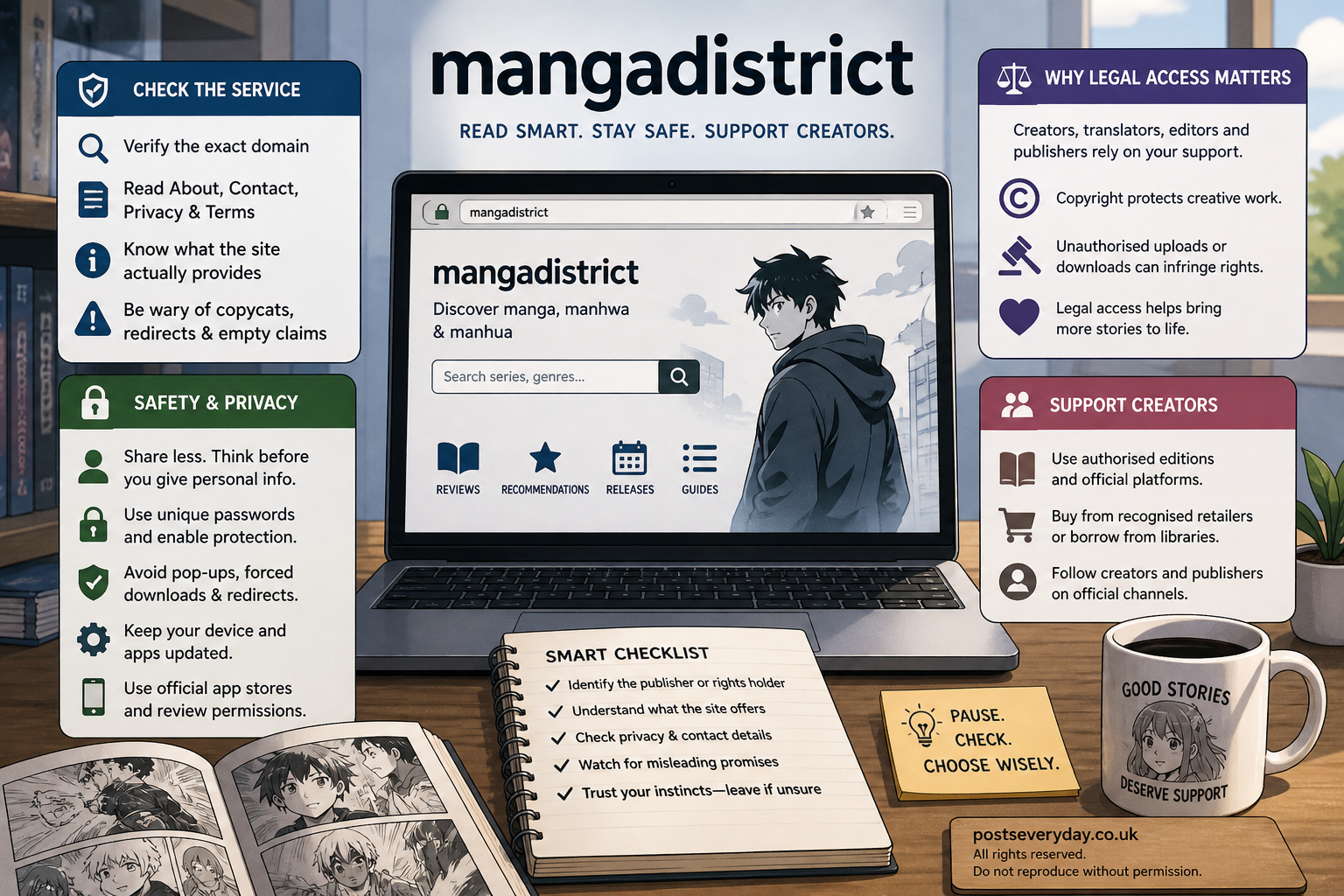
Searching for mangadistrict can bring up different pages, apps and reader discussions, so it is worth taking a moment to check exactly what you have found. Manga and manhwa fans often want a quick way to discover a new series, follow a story or compare reader recommendations. A useful starting point is to separate general information about a service from claims about its catalogue, safety or publishing rights. This guide explains how to assess a manga-reading site, protect your privacy and find reading options that respect creators.
Start by checking the exact service
A name in a search result is not proof that every page using that name belongs to the same operator. Similar names, changed domains and copied pages can make it difficult to tell whether a result is an editorial resource, a reading platform or an unrelated app. For example, MangaDistrict.org describes itself as an editorial site focused on manga, manhwa and manhua discovery, rather than a chapter-hosting service. That description applies to the site presenting it; it does not automatically establish what another domain or app offers. ([mangadistrict.org](https://mangadistrict.org/about-us/?utm_source=openai))
Before browsing, inspect the full domain in the address bar and read the About, Contact, privacy and terms pages. Look for a clear explanation of who operates the service and how its content is made available. Be wary of pages that imitate a familiar name, offer no meaningful contact information or redirect you through several unfamiliar addresses. A polished logo or a high search ranking is not, by itself, evidence of legitimacy.
What readers look for
People searching for mangadistrict may be looking for series suggestions, genre guides, release information or a convenient way to organise a reading list. Those needs are reasonable, but a search phrase does not tell you whether a particular site has permission to display a comic, whether its listings are current or whether it is suitable for younger readers. Check the details on the specific page rather than assuming that search snippets describe the whole service accurately.
For discovery, useful editorial coverage should give context instead of simply repeating a title. A thoughtful review can describe the premise without spoiling major turns, explain who might enjoy the pacing or art style, and note whether the work contains mature themes. A well-maintained guide should distinguish confirmed release information from speculation. If the site makes strong claims but gives no dates, sources or correction process, treat those claims cautiously.
Read descriptions and age guidance
Manga covers a wide range of genres and audiences. Some works are suitable for children; others include violence, sexual themes or material intended only for adults. Check the publisher’s age rating and content notes where available, and do not rely on a thumbnail or a short search excerpt to judge suitability. If you are choosing for a young reader, browse together and agree on what is appropriate before creating an account or opening unfamiliar pages.
Search results can also combine titles that sound alike or use unofficial translations. Confirm the creator, series name and publisher before assuming that two listings refer to the same work. This small check helps avoid spoilers, confusing reading orders and misleading recommendations.
Safety and privacy basics
Reading pages should not require you to share more personal information than the service genuinely needs. Think carefully before giving a site your full name, phone number, payment details or a password you use elsewhere. If an account is optional, consider whether you need one. If you do register, use a unique password and enable additional account protection when offered.
Unexpected pop-ups, forced downloads, repeated redirects and urgent fake security warnings are reasons to close the page, not to follow its instructions. The Federal Trade Commission warns that malware can steal personal information, and identifies unwanted redirects and excessive pop-ups among possible warning signs. If you suspect a device has been affected, stop entering passwords or financial details, update trusted security software and run a scan. ([consumer.ftc.gov](https://consumer.ftc.gov/articles/malware-how-protect-against-detect-and-remove-it?utm_source=openai))
Keep your browser and operating system updated, avoid downloading unknown reading apps from advertisements, and do not install a browser extension simply because a page says it is required. Use your device’s official app store when you decide to install an app, and review the developer name, permissions and privacy disclosures. A request for access to contacts, messages or unrelated files deserves particular scrutiny for a comic-reading tool.
Why legal access matters
Creators, translators, editors, artists and publishers all contribute to the work readers enjoy. A site displaying a comic does not necessarily have permission to distribute it. The U.S. Copyright Office explains that uploading or downloading protected works without the copyright owner’s authority can infringe the owner’s exclusive rights, while also recognising that copyright exceptions and limitations may apply in particular circumstances. The status of a specific page depends on its facts, so avoid treating a general article as individual legal advice. ([copyright.gov](https://www.copyright.gov/help/faq/faq-fairuse.html?utm_source=openai))
When possible, look for an official publisher, creator-approved platform, library service or authorised digital edition. Availability varies by country and by series, and licensed catalogues can change. If a title is not available where you live, check the publisher’s regional information or ask a librarian about legitimate options. Paying for an authorised edition or borrowing through a library helps support continued publication and gives readers clearer information about who provides the work.
How to assess a page without guessing
Use a few practical checks. Does the page identify the publisher or rights holder? Does it explain whether it hosts chapters, links to other services or provides editorial information only? Are its privacy and contact details specific and usable? Do buttons behave as labelled, or do they trigger unrelated downloads and redirects? Does the page make exaggerated promises, such as claiming every new release is available instantly without explaining its source?
No single clue proves a site is safe or unsafe. A privacy policy can be incomplete, and an attractive design can be copied. Combine the visible information, your browser’s warnings and the service’s own explanations. If something feels inconsistent, leave rather than entering personal details. You can also search for the operator’s name separately and compare the results, taking care to distinguish advertisements from independent information.
Finding dependable alternatives
If your goal is to discover a series, try publisher catalogues, library databases, creator interviews and established reviews. If you want to read digitally, check which licensed apps or websites operate in your region. A library may offer comics through its own digital lending service, while publishers sometimes provide selected chapters or promotional previews. These routes may not have every title, but they provide clearer information about availability and rights.
Keep a personal reading list with the series name, creator and volume or chapter number. This is useful when a page disappears or when you switch between print and digital editions. For ongoing series, confirm the reading order using publisher information rather than relying on a random repost or an incomplete fan-maintained listing.
Frequently asked questions
Is MangaDistrict one specific website?
The name can appear in more than one online context. Check the exact domain or app listing and read its own description. Do not assume that similarly named services share an owner, catalogue or policies.
Can a search result confirm that a comic is officially licensed?
No. A result’s title or preview does not prove that the work is authorised for distribution. Look for information from the publisher, creator or recognised rights holder.
What should I do if a reading page opens suspicious pop-ups?
Close the page without clicking the pop-up, do not download anything it offers, and avoid entering personal information. If you see ongoing redirects or other device changes, follow trusted security guidance and run an updated scan. ([consumer.ftc.gov](https://consumer.ftc.gov/articles/malware-how-protect-against-detect-and-remove-it?utm_source=openai))
How can I support manga creators?
Use authorised editions when available, buy from recognised retailers, borrow through a library or follow the creator and publisher’s official channels. These choices help direct support to the people who make and release the work.
Choose with care
The best way to approach mangadistrict is to treat the name as a starting point for careful checking, not as a guarantee about a particular page. Verify the domain, understand what the service actually provides, protect your personal information and look for clear signs that the material is distributed with permission. Readers do not need to be cybersecurity experts to make sensible choices: pause at unexpected requests, check primary information and leave when a page feels misleading. With those habits, it is easier to discover manga and manhwa while keeping creators, privacy and age-appropriate reading in view.




Post Comment