Hiroshi Mikitani and Henrik Fisker: Two Distinct Paths
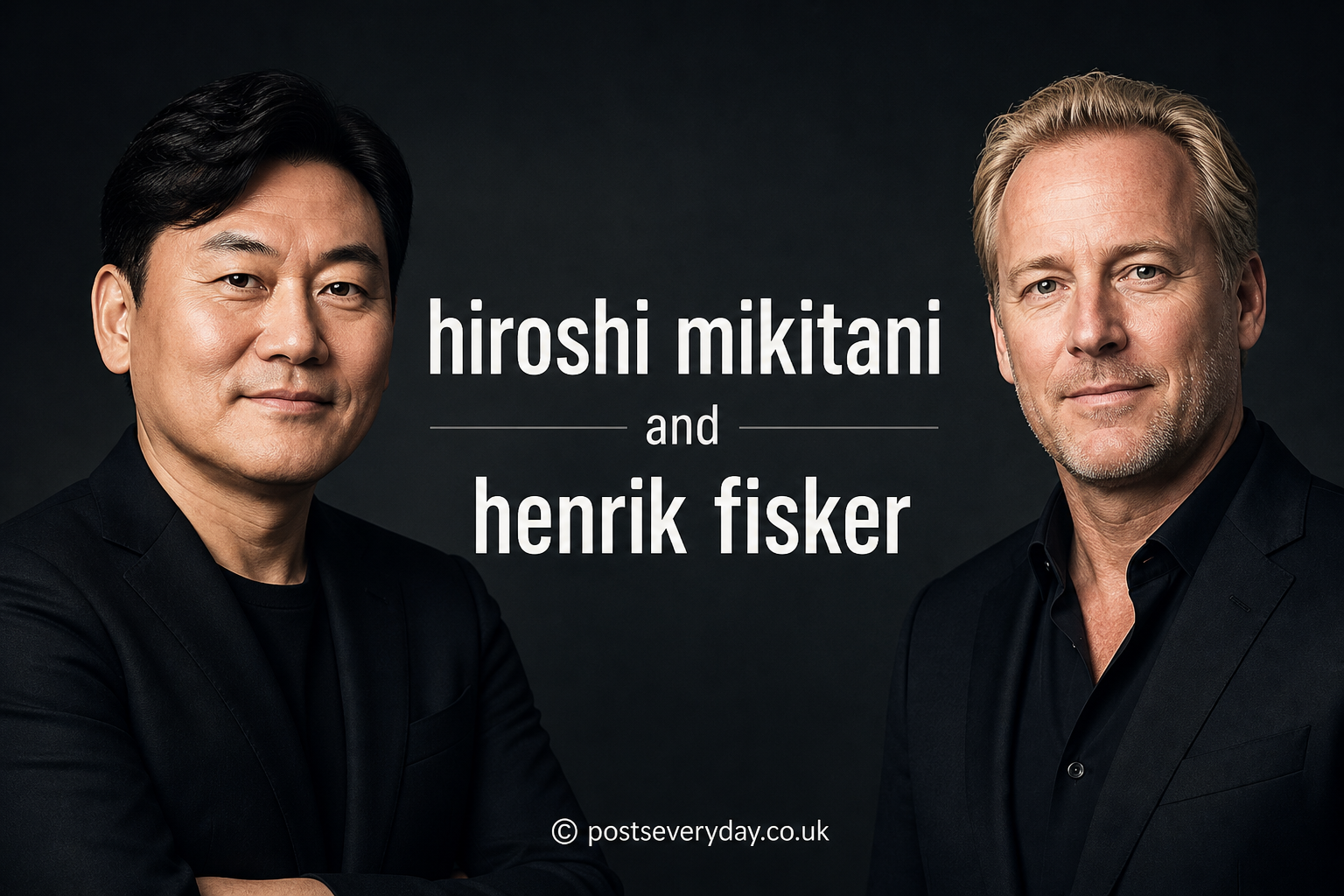
Hiroshi Mikitani and Henrik Fisker: Two Distinct Paths
The names hiroshi mikitani and henrik fisker often appear together in online searches, inviting a question: are these two entrepreneurs connected? Their publicly documented careers point to separate worlds. Mikitani built a broad internet-services business from a Japanese online marketplace, while Fisker became known for automotive design and electric-vehicle ventures. Comparing them is most useful not as a story of partnership, but as a look at two different ways to turn a bold idea into a company.
There is no widely documented business partnership between them in the public biographies and company records reviewed for this article. That distinction matters: a shared search phrase does not establish a personal relationship, investment, or joint project. What does connect their stories in a broader sense is the challenge of entrepreneurship: each pursued a vision in an industry undergoing significant change.
Hiroshi Mikitani and the Rakuten idea
Hiroshi Mikitani is the founder and long-time leader of Rakuten Group, a Japanese company whose services span areas including e-commerce, finance, digital content, communications and sport. Before founding the business, he worked in investment banking and earned an MBA from Harvard Business School. Rakuten’s official biography describes him as its founder, chairman and CEO, while the company’s history records its 1997 founding and the launch of its online shopping service that year. ([global.rakuten.com](https://global.rakuten.com/corp/about/team/01.html?utm_source=openai))
The early idea was practical as well as ambitious: help merchants reach customers online. Rakuten Ichiba began with a small team and a limited number of participating shops, offering merchants a way to present their own stores rather than simply placing products in a faceless catalogue. Rakuten’s company history describes the founding marketplace as starting with six employees, one server and 13 merchants. That modest beginning makes the scale of the later business easier to understand, while also showing that its first proposition was focused: support sellers and make online shopping accessible. ([global.rakuten.com](https://global.rakuten.com/corp/about/history.html?utm_source=openai))
Building an ecosystem, not just a shop
Over time, Rakuten expanded beyond online retail. Its wider group now includes a range of services, and the company presents its connected membership and service model as an ecosystem. The strategic shift illustrates Mikitani’s approach: build around a central customer relationship, then add services that can complement it. That approach can create convenience and cross-service value, although it also means a company must manage very different businesses, technologies and customer expectations.
Mikitani’s public leadership is closely associated with the company’s identity and its emphasis on innovation and entrepreneurship. Rakuten’s own history and corporate material are useful sources for understanding that story, but they are also company accounts, so they naturally foreground the group’s ambitions and achievements. A balanced view recognises both the original merchant-focused idea and the complexity of operating a large, diverse business across markets.
Henrik Fisker’s design-led career
Henrik Fisker’s professional identity begins in a different place: automotive design. He is a Danish-born designer and entrepreneur whose career has involved premium vehicle design and attempts to build car companies. His personal professional biography highlights work associated with vehicles including the BMW Z8, Aston Martin models, the Fisker Karma and the Fisker Ocean. The precise contribution to individual vehicle programmes can depend on team roles and project history, so it is sensible to distinguish a designer’s public profile from the work of the many engineers and colleagues involved in bringing a car to production. ([henrikfisker.org](https://www.henrikfisker.org/?utm_source=openai))
Fisker’s ventures show how a recognisable design vision can become the centre of a business proposition. The Karma, for example, was presented as a premium electrified performance car, while Fisker Inc. later pursued electric vehicles including the Ocean. The company’s 2023 press kit described a strategy that combined in-house design and engineering with external manufacturing partners. That model aimed to avoid building every part of the production system from scratch, but it also made the company dependent on partners, suppliers, funding and the difficult logistics of launching vehicles at scale. ([assets.ctfassets.net](https://assets.ctfassets.net/cghen8gr8e1n/2yYcTNA4WRJh0W4O9kfiqO/2457c150477e595d63a14d0e075634b5/FIsker_Press_Kit_July_2023_US.pdf?utm_source=openai))
Why carmaking tests founders differently
A vehicle is not only a product concept or a striking exterior. It must meet safety and regulatory requirements, be manufactured consistently, reach customers, receive updates and support, and remain serviceable after sale. Automakers also need substantial capital and reliable supply chains. These pressures help explain why a promising design does not guarantee a durable company. Fisker’s career therefore offers a useful distinction between creative achievement and the operational demands of running a car manufacturer.
In June 2024, Fisker Inc. and certain US subsidiaries filed voluntary Chapter 11 bankruptcy cases. The company’s filing with the US Securities and Exchange Commission records the June 17 and June 19 dates. Chapter 11 is a court-supervised process, and the filing itself should not be treated as a complete account of every customer, creditor or later case development. It does, however, mark a significant setback in the company’s attempt to establish its electric-vehicle business. ([sec.gov](https://www.sec.gov/Archives/edgar/data/1720990/000119312524167032/d798771d8k.htm?utm_source=openai))
What the comparison reveals
Comparing hiroshi mikitani and henrik fisker is most illuminating when the focus stays on their different business environments. Mikitani’s marketplace model connected merchants and shoppers through software and services; it could expand by adding new categories, platforms and membership benefits. Fisker’s work centred on physical products, where design, engineering, factory capacity, component supply and after-sales support must come together before a customer can take delivery.
The two paths also show distinct meanings of innovation. In Rakuten’s early marketplace, innovation involved changing how smaller merchants could reach buyers. In Fisker’s work, it involved imagining and presenting vehicles with distinctive design and electrification ambitions. Both ideas depend on understanding what customers value, but the route from concept to everyday use differs sharply: a digital service can be updated and expanded comparatively quickly, while a car programme requires years of development and extensive industrial coordination.
That contrast is not a simple verdict on which founder was more successful. Rakuten’s established scale and Fisker’s company setbacks belong to different sectors, periods and business conditions. A fair comparison considers the size of the investment required, the kinds of risk involved, the maturity of the market, and the responsibilities founders carry to customers, employees, partners and investors. It also avoids confusing a founder’s public image with the full contribution of their teams.
Frequently asked questions
Are Hiroshi Mikitani and Henrik Fisker business partners?
No publicly documented partnership between them was identified in the company biographies and records reviewed here. Their names are best understood as a comparison of two entrepreneurs in separate industries, rather than evidence of a joint venture or personal connection.
What is Hiroshi Mikitani best known for?
He is best known as the founder and leader of Rakuten, which began with the Rakuten Ichiba online marketplace in 1997 and later developed into a group offering services across multiple sectors. ([global.rakuten.com](https://global.rakuten.com/corp/about/team/01.html?utm_source=openai))
What is Henrik Fisker known for?
Fisker is known as an automotive designer and entrepreneur. His public profile is associated with premium vehicle design and electric-car ventures, including the Karma and Ocean projects. Fisker Inc. filed for Chapter 11 protection in June 2024. ([henrikfisker.org](https://www.henrikfisker.org/?utm_source=openai))
Why are their careers compared?
Both are recognisable founders associated with ambitious ideas, but the comparison is mainly useful for understanding how entrepreneurship changes across industries. One built a digital marketplace and a broad services group; the other pursued design-led automotive projects in a capital-intensive manufacturing sector.
Two visions, different lessons
The story of hiroshi mikitani and henrik fisker is not a documented tale of collaboration. It is a contrast between two entrepreneurial paths: one built around connecting merchants through an expanding digital ecosystem, the other around design and the demanding business of creating vehicles. Their careers underline a grounded lesson for readers: an appealing vision can attract attention, but lasting results also depend on execution, resources, customer trust and the realities of the industry. For anyone exploring hiroshi mikitani and henrik fisker, that distinction offers a more accurate and useful perspective than assuming a connection that the public record does not establish.





Post Comment