Hiroshi Mikitani and James Gorman: Two Leadership Paths
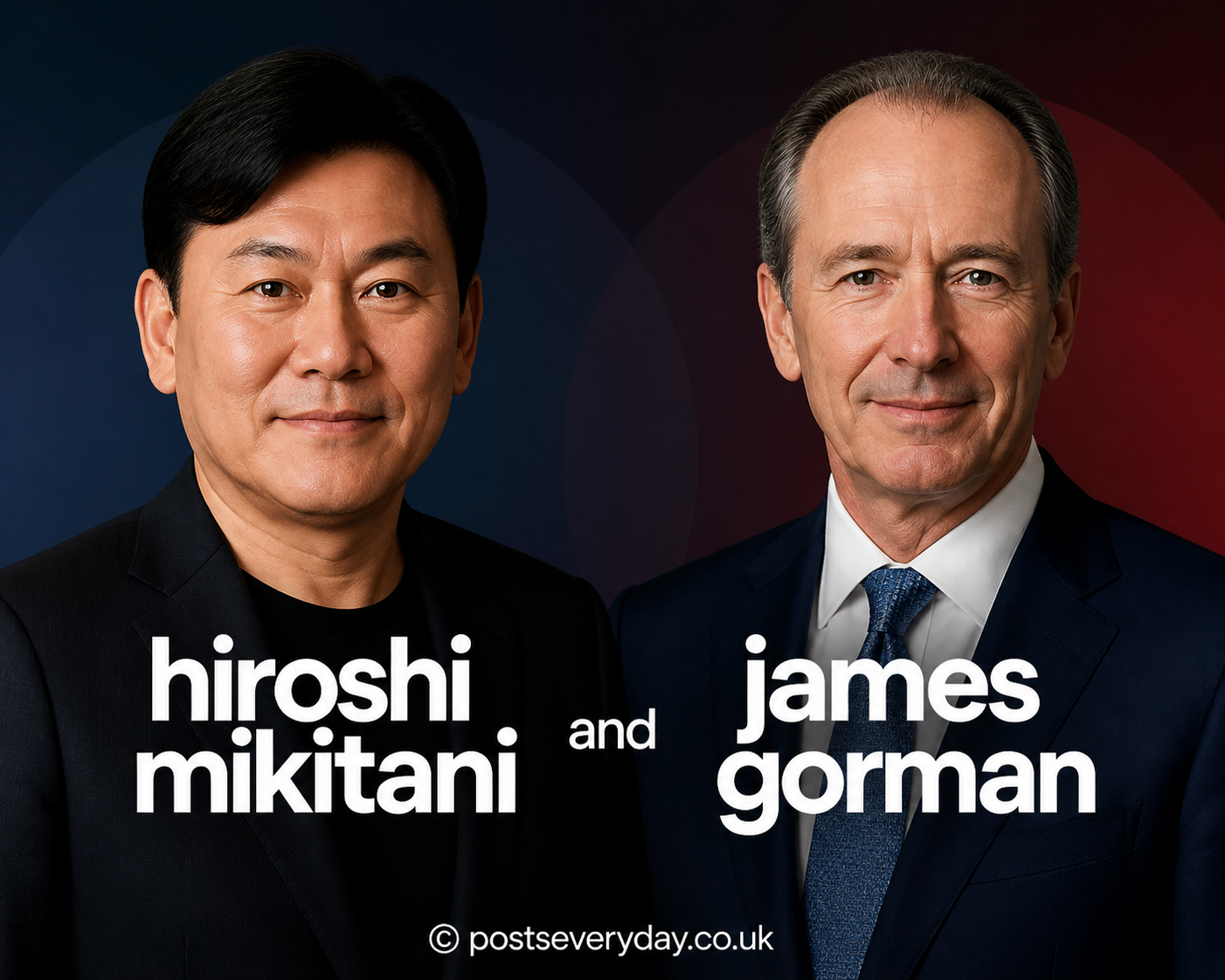
Hiroshi Mikitani and James Gorman: Two Leadership Paths
hiroshi mikitani and james gorman are influential business leaders whose careers offer a revealing contrast: one built a broad digital-services company from a Japanese start-up, while the other guided a major Wall Street institution through a period of strategic change. Their stories are not a shared biography or a known business partnership. They are worth considering together because they show how leadership can take different forms in very different industries.
Two careers, two industries
Hiroshi Mikitani is the founder and chief executive of Rakuten Group, a Japan-based company with businesses spanning online shopping, financial technology, digital content and communications. James Gorman is a senior financial-services executive who led Morgan Stanley as its chief executive from 2010 to 2023 and later served as its chairman emeritus. Their paths intersect most clearly in the broad themes of strategy, organisational change and long-term leadership—not in a publicly documented joint venture.
That distinction matters. Comparisons can make two prominent names sound connected when the evidence points instead to separate careers. A more useful view is to examine what each leader built, the decisions associated with his tenure, and the different demands of running a technology-focused consumer ecosystem and a global financial institution.
Hiroshi Mikitani’s entrepreneurial approach
Mikitani began his career at the Industrial Bank of Japan and earned an MBA from Harvard Business School in 1993. In 1997, he founded the company that became Rakuten. Its early online marketplace gave independent merchants a way to reach customers through the internet, helping establish a distinct model in Japan’s growing e-commerce market. Rakuten’s own biography describes the business as a group of services across areas including e-commerce, fintech, digital content and communications. ([global.rakuten.com](https://global.rakuten.com/corp/about/team/01.html?utm_source=openai))
His best-known leadership choice has been to build beyond a single shopping site. Rakuten developed an ecosystem of related services, including financial offerings and mobile communications. The idea is that customers may find value in using several services within the same group, while merchants and partners can reach audiences across different parts of the business. This strategy can create opportunities for cross-service growth, but it also asks management to coordinate businesses with distinct technologies, customers and financial needs.
Mikitani’s story is often associated with entrepreneurship because he left a conventional banking career to establish a new company. That decision alone does not explain Rakuten’s development; the company’s growth also depended on employees, merchants, customers, investment and years of operational work. Still, his move from banking into internet commerce is a defining feature of his public career and a useful reminder that established experience can inform risk-taking without eliminating its uncertainty.
James Gorman’s leadership at Morgan Stanley
Gorman’s career followed a different route. Born in Australia, he studied law and arts at the University of Melbourne and later earned an MBA from Columbia Business School. Before joining Morgan Stanley in 2006, he held senior roles at Merrill Lynch and worked as a senior partner at McKinsey & Company. Morgan Stanley records that he became CEO in January 2010 and chairman in January 2012. ([morganstanley.com](https://www.morganstanley.com/about-us-governance/operating-committee/james-gorman?utm_source=openai))
During his time at the top, Morgan Stanley developed into a more diversified financial institution, with wealth management becoming a central part of its business alongside investment banking and institutional securities. That broad description is not a claim that one executive alone produced every change: a large financial company’s direction reflects decisions by many leaders, employees, clients and regulators. Gorman’s tenure is nevertheless notable for the strategic emphasis on a broader business mix and for a planned leadership transition.
In January 2024, Gorman moved from chief executive to executive chairman. He left the firm at the end of 2024 and became chairman emeritus in January 2025. Morgan Stanley’s leadership biography now identifies him as chairman emeritus, while the company announced that Ted Pick would become chairman on 1 January 2025. ([morganstanley.com](https://www.morganstanley.com/about-us-governance/operating-committee/james-gorman?utm_source=openai))
What makes the comparison interesting
The phrase hiroshi mikitani and james gorman brings together a founder-operator and a leader who spent much of his career inside established financial institutions. Mikitani’s work has involved creating and expanding a consumer-facing business ecosystem. Gorman’s work involved managing a highly regulated financial firm, shaping its priorities and preparing a successor. The settings are different, but both require leaders to make decisions under uncertainty and to align teams around a longer-term direction.
Their backgrounds also show how education and early careers can provide useful tools without determining a person’s eventual field. Mikitani’s banking experience preceded his move into e-commerce. Gorman’s combination of law, consulting and financial-services experience informed a career in corporate leadership. Neither biography can be reduced to a single credential or a simple formula for success; what matters is how experience is applied to a particular organisation and moment.
There is a further contrast in how their leadership stories are framed. Mikitani is closely associated with the founding and continued leadership of Rakuten. Gorman’s public profile is tied to a long executive tenure and a completed succession at Morgan Stanley. One story centres on building and broadening a company; the other on steering a mature institution and eventually handing over its leadership.
Lessons for readers and business owners
For entrepreneurs, Mikitani’s career illustrates the value of testing a clear idea against a real customer need. An online marketplace can help merchants connect with buyers, but sustaining a larger ecosystem calls for attention to service quality, trust and the different economics of each business. Expansion can bring new sources of value, yet it also raises the complexity of management. Growth is not automatically a sign that every part of a strategy is working equally well.
For leaders in established organisations, Gorman’s career highlights the importance of strategic focus and succession planning. A successful handover is not simply a date on a calendar; it requires capable successors, preparation and clarity about responsibilities. Morgan Stanley’s public account of the transition identifies the change in roles and dates, offering a concrete example of leadership succession at a major company. ([morganstanley.com](https://www.morganstanley.com/about-us-governance/operating-committee/james-gorman?utm_source=openai))
For anyone following business, the larger takeaway is to judge leaders in context. A choice that makes sense for a digital-services group may not suit a bank, and a move that looks bold from the outside may involve years of groundwork. Looking beyond celebrity status to the organisation, industry and time period makes a comparison more informative and fair.
Frequently asked questions
Are Hiroshi Mikitani and James Gorman business partners?
No direct business partnership between them is established in the official biographies cited here. They are discussed together as prominent leaders from different industries, rather than as collaborators.
What is Hiroshi Mikitani known for?
He is best known as Rakuten’s founder and chief executive. He established the company in 1997, and Rakuten has since expanded into several areas of internet services and communications. ([global.rakuten.com](https://global.rakuten.com/corp/about/team/01.html?utm_source=openai))
What role does James Gorman hold at Morgan Stanley?
As of the company’s current leadership biography, Gorman is chairman emeritus. He was CEO from 2010 to 2023, chairman from 2012 to 2023, and executive chairman during 2024. ([morganstanley.com](https://www.morganstanley.com/about-us-governance/operating-committee/james-gorman?utm_source=openai))
Why are their careers often compared?
The comparison is useful because both men have led large, complex organisations, but their businesses and routes to leadership differ sharply. One built a technology and services group; the other led a global financial institution through strategic change and succession.
A contrast worth understanding
Ultimately, hiroshi mikitani and james gorman represent two distinct approaches to leading ambitious organisations: entrepreneurial expansion and the stewardship of an established financial institution. Their careers should not be treated as a shared story, but considered side by side they offer a grounded look at how strategy, experience and timing shape leadership. Understanding both the similarities and the differences makes their individual achievements—and the challenges behind them—more meaningful.





Post Comment